
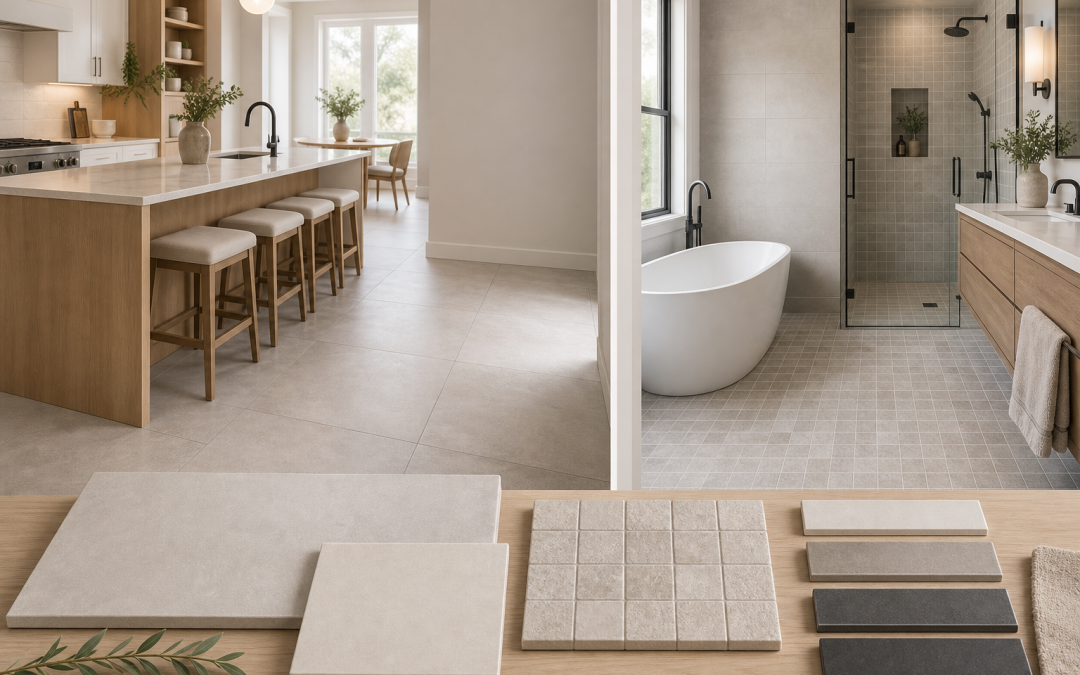
Tile flooring in kitchens and bathrooms is popular for good reason. It is durable, water-resistant, and visually versatile. But choosing tile is not just about picking a style you like in a showroom.
The size of the tile, the surface finish, and even the grout color all influence how the room feels, how easy it is to clean, and how well the floor performs over time.
A good tile selection balances three priorities: function, maintenance, and design impact. When those three align, the space feels intentional rather than improvised.
Choosing the Right Tile Size: How Scale Changes the Room
Tile size has a direct impact on how large or small a space feels.
Larger tiles create fewer grout lines, which makes the floor appear more continuous and visually open. This is especially helpful in smaller kitchens and bathrooms where reducing visual breaks can make the room feel less crowded. Fewer grout joints also means less maintenance over time.
Smaller tiles, on the other hand, increase grip and can work well in wet areas like shower floors. The additional grout lines add traction, which improves safety, especially in bathrooms.
There is also a middle ground. Medium-format tiles often provide a balance between visual simplicity and practical grip.
In general, larger tiles are often used for modern, seamless looks, while smaller tiles are chosen for function-heavy or highly detailed designs.
Tile Finish: The Difference Between Matte, Glossy, and Textured Surfaces
The finish of your tile affects both appearance and safety.
Glossy tiles reflect light and can make a bathroom or kitchen feel brighter and more polished. They are often used on walls or low-traffic areas, but they can become slippery when used on floors, especially in wet conditions.
Matte finishes offer a softer look and tend to be more forgiving when it comes to water spots, footprints, and smudges. They are often preferred for floors because they provide better slip resistance.
Textured tiles go one step further by adding physical grip to the surface. These are especially useful in bathrooms where water exposure is frequent.
Natural stone and certain ceramic finishes can also introduce subtle variation, which helps hide wear over time and creates a more organic, lived-in appearance.
The key is matching the finish to the room’s function rather than choosing purely on appearance.
How Tile Size and Finish Work Together
Tile size and finish should always be considered together, not separately.
Large glossy tiles can create a sleek, high-end look, but they may show water spots more easily in bathrooms. Large matte tiles, by contrast, offer a more grounded, contemporary feel with better practicality.
Small textured tiles are often used in shower floors because they combine grip with flexibility for sloped drainage areas.
When these elements are aligned correctly, the floor not only looks cohesive but also performs better in daily use.
Grout Color: The Most Underrated Design Decision
Grout is often treated as an afterthought, but it has a major impact on the final look of tile flooring.
Matching grout to tile color creates a seamless surface where the floor appears more unified and expansive. This approach works well in smaller rooms where reducing visual breaks helps the space feel larger.
Contrasting grout, on the other hand, highlights the tile pattern. This is common in designs where the layout itself is part of the aesthetic, such as geometric or subway tile arrangements.
For kitchen and bathroom floors specifically, practicality often plays a big role. Mid-tone grout colors are frequently chosen because they help conceal dirt and wear better than very light or very dark options.
In high-traffic areas, grout color becomes as much about maintenance as it is about style.
Matching Tile Style to Room Function
Different rooms place different demands on tile flooring.
Kitchens experience frequent foot traffic, spills, and dropped items. This makes durability and stain resistance especially important. Slightly textured or matte finishes are often preferred here for practicality.
Bathrooms introduce moisture as the main factor. Slip resistance becomes critical, especially in shower zones and near sinks. Smaller tiles or textured finishes are often used in these areas to improve safety.
In both cases, the goal is the same: choose a tile that supports how the space is actually used, not just how it looks in a catalog.
Common Mistakes When Choosing Tile Flooring
One of the most common mistakes is choosing tile based only on appearance without considering maintenance. Highly glossy floors may look elegant but can be difficult to keep clean in high-use spaces.
Another mistake is ignoring grout color until the end of the project. Since grout affects both appearance and maintenance, it should be selected alongside tile, not afterward.
Homeowners also often underestimate how tile size changes the feel of a room. Very small tiles in a small bathroom can sometimes make the space feel busier rather than larger.
Finally, selecting the wrong finish for the room’s function can lead to long-term frustration, especially when safety or cleaning becomes an issue.
Real-World Example: How Small Changes Affect the Outcome
Two bathrooms can use the same tile design but feel completely different based on three choices: tile size, finish, and grout color.
In one version, large matte tiles with matching grout create a calm, continuous surface that feels open and minimal.
In another, smaller glossy tiles with contrasting grout create a more detailed, patterned look that draws attention to the floor itself.
Neither choice is wrong. They simply serve different design goals.
The difference lies in intention.
FAQ: Tile Flooring for Kitchens and Bathrooms
What tile size is best for small bathrooms?
Medium to large tiles often work best because they reduce grout lines and make the space feel more open.
Is matte or glossy tile better for floors?
Matte is generally better for floors due to improved slip resistance and easier maintenance.
What grout color is easiest to maintain?
Mid-tone grays and neutrals tend to hide dirt and discoloration better than very light or very dark grout.
Can I use the same tile in the kitchen and bathroom?
Yes, but finishes and grout choices should be adjusted based on moisture and traffic levels.
Does tile size affect durability?
Tile size does not directly affect durability, but it can affect installation complexity and how well the floor performs in wet conditions.
The Best Tile Choices Are Functional First, Aesthetic Second
Choosing tile flooring for kitchens and bathrooms is not just a design decision. It is a long-term functional investment.
Tile size affects spatial perception and maintenance. Finish impacts safety and cleaning. Grout color influences both style and practicality.
When these elements are chosen with intention, the result is a floor that not only looks good on day one but continues to perform well for years.
The most successful tile installations are not the most expensive or the most decorative. They are the ones that quietly support everyday life without drawing attention to themselves.