
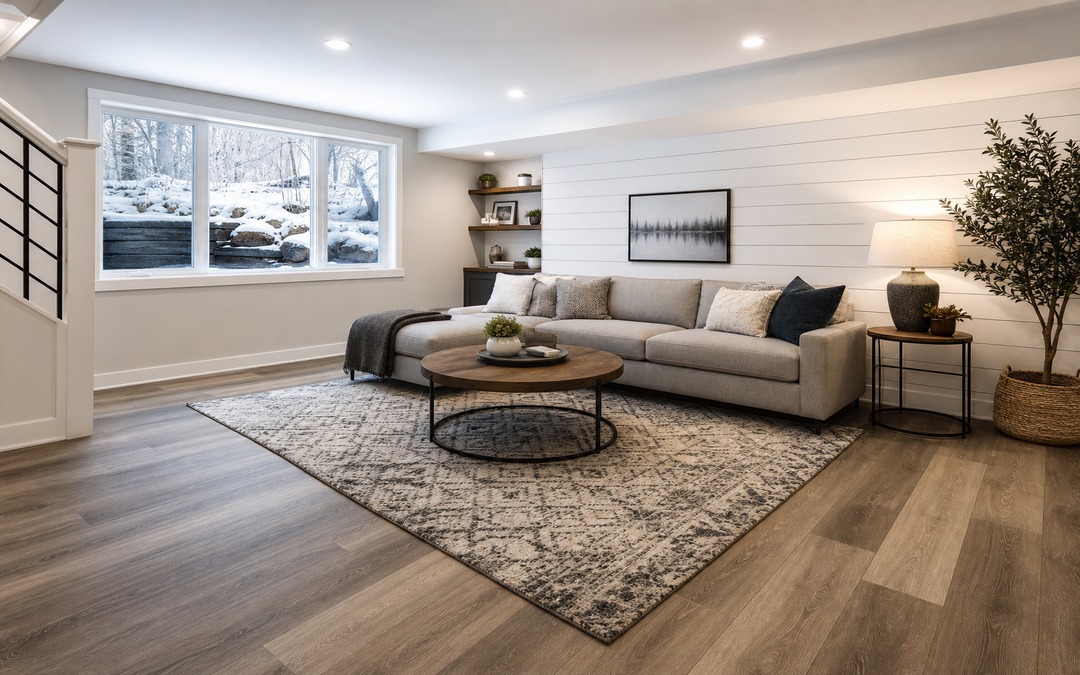
Finishing a basement is one of the smartest ways to add usable living space in Minnesota. Whether you are building a family room, home office, workout area, guest suite, or playroom, one decision will shape the comfort, durability, and long-term value of the entire project: your flooring choice.
Basements are not like the rest of your home. They are below grade, cooler, more humid, and more vulnerable to moisture intrusion from foundation walls, concrete slabs, and seasonal groundwater changes. That is why choosing the wrong basement flooring can lead to warping, mold concerns, cold uncomfortable surfaces, and costly replacement far sooner than expected.
At Flooring By Design, we have installed flooring in hundreds of residential and commercial spaces across the Twin Cities and Jordan, MN area. This guide walks you through the best basement flooring options for Minnesota homes room by room so you can plan with confidence.
Why Basement Flooring Is Different in Minnesota
Minnesota basements face a unique set of challenges that upper-level rooms simply do not.
- Concrete subfloors hold cold and moisture.
- Spring thaw and heavy rains increase groundwater pressure.
- HVAC differences make basements cooler year-round.
- Humidity swings can affect adhesives, wood products, and underlayment.
- Many older homes have minor foundation seepage or condensation issues.
The best basement flooring is not just about looks — it is about managing moisture risk, temperature comfort, and how the space will actually be used.
The Real Cost Range for Basement Flooring in Minnesota
Basement flooring in Minnesota typically ranges from $4 to $15+ per square foot installed, depending on material, subfloor condition, moisture mitigation, and room size.
- Basic carpet or laminate: $4–$8 per sq ft installed
- Quality luxury vinyl plank (LVP): $5–$12 per sq ft installed
- Ceramic or porcelain tile: $8–$15+ per sq ft installed
- Engineered hardwood (moisture-controlled basements only): $8–$16+ per sq ft installed
These ranges assume standard subfloor conditions. If your basement needs moisture barrier installation, subfloor leveling, or old flooring removal, your total project cost will increase.
What Actually Drives Basement Flooring Costs
Subfloor Condition
A cracked, uneven, or damp concrete slab requires prep work before any flooring can be installed properly. Skipping this step is one of the most expensive mistakes homeowners make.
Moisture Protection
Vapor barriers, waterproof underlayment, and moisture-rated adhesives add cost upfront but prevent major problems later. In Minnesota basements, this is not optional for most installations
Material Quality
Not all LVP, carpet, or tile is created equal. Basement-grade products with waterproof cores, mold-resistant backing, and proper wear layers cost more — and perform far better long term
Room Layout and Obstacles’
Bathrooms, stair landings, support posts, and irregular room shapes increase labor time and material waste
Top Basement Flooring Options Compared
Luxury Vinyl Plank (LVP) — Best Overall for Most Minnesota Basements
LVP is the most popular basement flooring choice in Minnesota today — and for good reason. Waterproof or water-resistant options handle spills, humidity, and everyday basement conditions better than almost any alternative.
- Waterproof cores protect against moisture and accidents.
- Warm underfoot compared to bare tile or concrete.
- Durable enough for kids, pets, and recreational spaces.
- Available in realistic wood and stone looks.
- Easier and often more affordable to install than tile.
Best for: family rooms, playrooms, home gyms, offices, and general finished basement living space.
Tile — Best for Wet Areas and Maximum Moisture Protection
Porcelain and ceramic tile are among the most moisture-resistant flooring options available. If your basement includes a bathroom, bar sink area, or laundry space, tile is an excellent choice.
- Extremely water resistant when properly installed.
- Long lifespan with minimal maintenance.
- Ideal for basement bathrooms and utility areas.
- Works well with radiant floor heating systems.
Downside: tile feels cold underfoot in Minnesota basements unless paired with radiant heat or area rugs.
Carpet — Best for Bedrooms and Cozy Lounge Spaces
Carpet adds warmth and comfort that hard surfaces cannot match — especially in a naturally cool basement. However, carpet should only be installed in basements with proven moisture control.
- Adds warmth and sound absorption.
- Creates a cozy feel for bedrooms and media rooms.
- Budget-friendly option for large open areas.
- Requires moisture barrier and proper pad selection.
Avoid carpet in basements with active moisture problems or unsealed concrete slabs.
Laminate — Budget Option With Limitations
Laminate can work in dry, well-controlled basements but is more vulnerable to moisture than LVP. For most Minnesota homeowners, waterproof LVP is worth the modest upgrade over standard laminate.
Room-by-Room Basement Flooring Guide
Basement Family Room / Rec Room
Typical size: 300–600 sq ft. Recommended: Luxury vinyl plank. Why: handles traffic, spills, and temperature changes while delivering a polished, comfortable living space.
Basement Bedroom
Typical size: 120–200 sq ft. Recommended: Carpet (with moisture barrier) or LVP. Why: carpet adds warmth for sleeping spaces; LVP is easier to clean and better for allergy-sensitive households.
Basement Home Office
Typical size: 100–180 sq ft. Recommended: LVP or laminate. Why: hard surfaces allow office chairs to roll smoothly and create a clean, professional appearance.
Basement Bathroom
Typical size: 40–80 sq ft. Recommended: Porcelain or ceramic tile. Why: maximum water resistance and long-term durability in the wettest basement space.
Basement Home Gym
Typical size: 150–300 sq ft. Recommended: LVP or rubber-topped LVP systems. Why: resists equipment impact, sweat, and heavy foot traffic while staying easy to clean.
Basement Playroom
Typical size: 200–400 sq ft. Recommended: LVP. Why: waterproof performance handles spills and messes while standing up to toys, furniture dragging, and daily kid activity.
Basement Bar / Entertainment Area
Typical size: 80–200 sq ft. Recommended: LVP near bar zones, tile behind sinks or beverage stations. Why: entertaining areas see spills and heavy foot traffic — waterproof surfaces near wet zones prevent long-term damage.
Basement Laundry Room
Typical size: 50–100 sq ft. Recommended: Tile or waterproof LVP. Why: washing machine leaks and detergent spills make moisture resistance essential in this space.
Whole Basement Projects: What to Expect
A full basement finish with 800–1,200 sq ft of flooring is common in Minnesota homes. Here is what homeowners typically budget:
- 800 sq ft basement with LVP: approximately $4,000–$9,600 installed (depending on product tier and prep).
- 1,200 sq ft basement with mixed LVP and tile: approximately $7,000–$14,000+ installed.
- Adding carpet to a 150 sq ft basement bedroom on top of LVP main area: add $600–$1,200.
- Subfloor moisture mitigation (vapor barrier + leveling): add $1–$3 per sq ft when needed.
These ranges vary based on product selection, subfloor condition, and whether old flooring must be removed. A professional in-home estimate gives the most accurate number for your specific basement.
The Hidden Costs Most Homeowners Miss
- Moisture testing and vapor barrier installation
- Concrete leveling or crack repair
- Removal of old basement flooring or adhesive
- Baseboard removal and reinstallation
- Transition strips between rooms and stair landings
- Furniture moving and project cleanup
- Upgrading to a dehumidifier for long-term humidity control
A flooring estimate that only covers material and basic labor often surprises homeowners when these line items appear. Always ask for a complete project scope before committing.
Common Basement Flooring Mistakes to Avoid
- Installing wood-based flooring without checking moisture levels first.
- Skipping a vapor barrier to save money upfront.
- Choosing carpet for a basement with known water history.
- Ignoring subfloor cracks and uneven slabs.
- Using the same flooring throughout without considering room function.
- DIY installation in large or irregular basement layouts.
Failing to address drainage or gutter issues outside the home
Pro Tips for Basement Flooring Success
- Run a moisture test on your concrete slab before selecting any flooring.
- Invest in waterproof LVP for any space with kids, pets, or entertaining.
- Use area rugs on LVP or tile to add warmth without sacrificing durability.
- Plan flooring transitions before installation — not during.
- Keep a dehumidifier running during humid Minnesota summers.
- Work with an experienced installer who understands below-grade conditions.
- Bring samples into your actual basement lighting before making a final choice.
Frequently Asked Questions
What is the best flooring for a Minnesota basement?
For most finished basement living spaces in Minnesota, luxury vinyl plank is the best all-around choice. It handles moisture, temperature changes, and daily wear better than hardwood or standard laminate while looking great and feeling comfortable underfoot.
Can I put hardwood in my basement?
Solid hardwood is not recommended for most basements. Engineered hardwood can work in tightly climate-controlled, dry basements, but LVP or tile is a safer investment for the majority of Minnesota homes.
Is carpet a bad idea in a basement?
Carpet is not automatically a bad choice — but it should only be installed when moisture is under control and a proper vapor barrier is in place. It works well in basement bedrooms and cozy media rooms.
How long does basement flooring installation take?
Most basement flooring projects take 1–3 days depending on square footage, subfloor prep, material type, and whether old flooring needs to be removed. Larger or more complex layouts may take longer.
Does Flooring By Design install basement flooring?
Yes. Flooring By Design provides professional basement flooring installation across the Twin Cities and Jordan, MN area. We offer free estimates, in-home samples, and expert guidance on the best products for below-grade spaces.
The Right Basement Floor Starts With the Right Plan
Your basement has more potential than almost any other space in your home — but only if the flooring is chosen wisely. Moisture, comfort, room use, and long-term durability should all factor into your decision before you buy a single plank or tile.
For most Minnesota homeowners, a combination approach works best: waterproof LVP in main living areas and play spaces, tile in bathrooms and wet zones, and carpet in bedrooms where warmth matters most.
Flooring By Design brings 30 years of installation experience to every basement project. Visit our showroom at 221 1st Street E, Jordan, MN, explore our vinyl plank, tile, carpet, and laminate collections, or schedule a free in-home estimate today.
Call (952) 492-2211 or visit flooring-bydesign.com to transform your basement with flooring built for Minnesota living.